
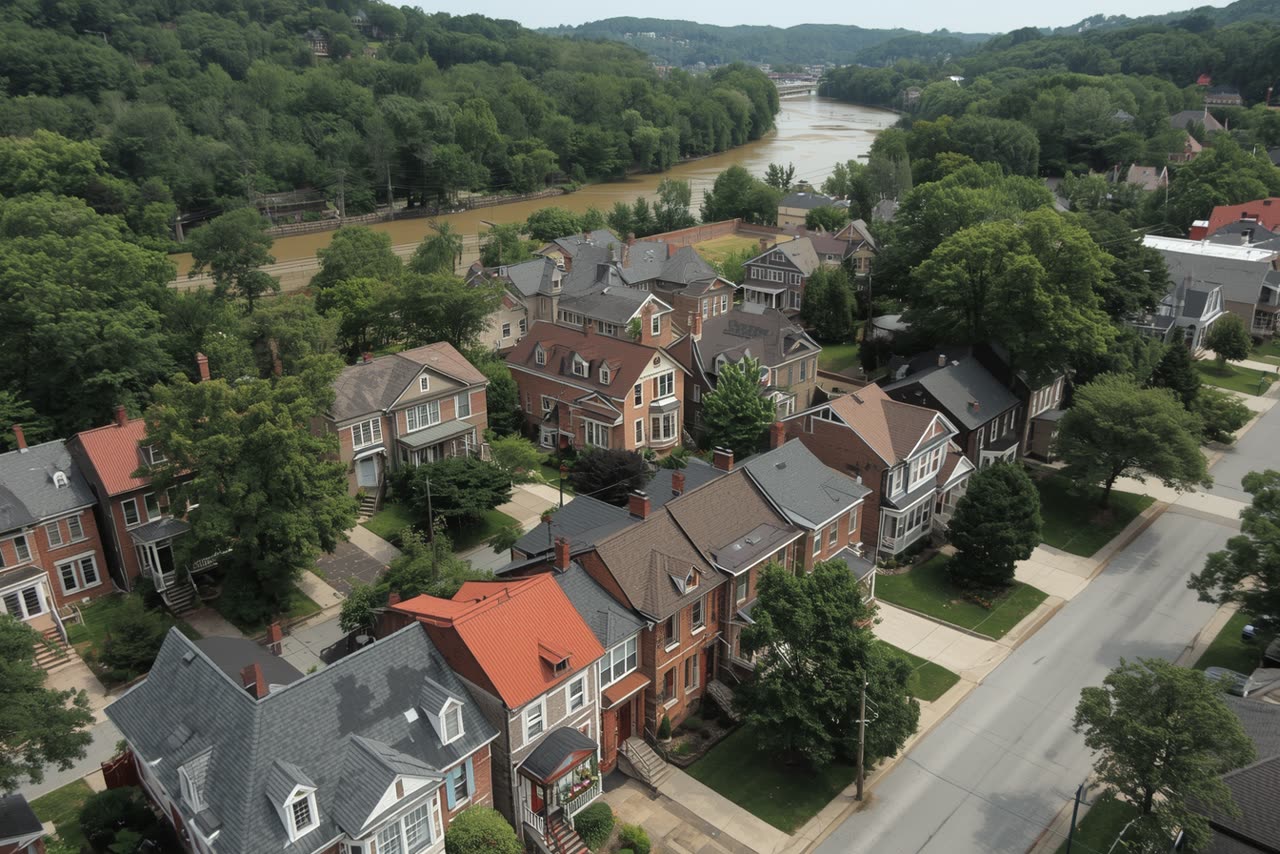
Powell has no city government of its own. It is an unincorporated community in Knox County, with about 13,700 residents in the Census count, and that shapes how roof repair and replacement are permitted here. Sequoyah Roofing connects Powell homeowners with an independent local roofing company. This page explains the county rules and the local weather so that you know what to ask when someone shows up with a clipboard.
Who handles permits when there is no city hall
Because Powell is not incorporated, building codes and permits for roof work come from Knox County Codes Administration rather than a city office. Neighboring Karns and Halls are in the same position. The county's main codes page does not give reroof guidance, and it does not name the code edition in the text. It links to county amendments and a codes adoption history instead.
So the honest answer to "do I need a permit" is that nobody on the public page says yes or no for a reroof, and you should ask. The county's permit portal is where applications go, and the codes office phone is 865-215-2325. Ask them two things: whether your project needs a permit, and what the inspection step looks like. Then ask your roofer who is pulling it. Hand-me-down advice from a neighbor about "no permit needed" is not enough, since permit rules differ by place across Tennessee.
You can read more about permits across the area in the permits and licenses guide.
The tornado, the straight-line winds and what they did to roofs
The nearest big weather event on record is August 7, 2023. The National Weather Service confirmed an EF-2 tornado in western Knox County near Karns, about 3.8 miles long with winds near 130 mph. It was the first EF-2 or stronger tornado in the county since February 1993, and roof damage was documented in the Lovell Cove subdivision. Across other parts of the area that day, straight-line winds of 60 to 90 mph were reported.
Powell was not named as a damage site in the sources used for this page, so do not read that as saying your roof was hit. It does say something useful about this part of Knox County: wind, not hail, is the roof threat that has caused the most documented damage in recent years.
Roofs fail in wind in predictable ways:
- Shingle tabs lift at the edges and crease, then tear off in strips.
- Ridge caps and rake edges go first, because that is where wind gets under.
- Falling limbs puncture the deck, and a tarp is the first fix, not the last.
- Soft or aged sealant strips let tabs flap even in modest wind.
If you see any of that after a storm, the storm damage roof repair page explains what to photograph and who to call first.
Housing age: what a median of 1992 tells you
The Census median year built in the Powell area is 1992, the same as nearby Karns and just ahead of Halls at 1991. Houses of that vintage are often on their second roof, or they are overdue for it. Common trouble spots are:
- Vent pipe boots, where the rubber collar cracks in the sun and lets water run down the pipe.
- Valleys on houses with more than one roof plane.
- The seam where a lower roof meets a taller wall, where flashing was nailed rather than sealed.
The roof leak repair page covers how a leak is traced from the stain back to its source.
Licensing in Knox County
Because the county has opted into the state Home Improvement license, a roofer working in Powell on a modest job is expected to hold it. The size thresholds are in the permits and licenses guide. Search the number at verify.tn.gov before work begins.
After a storm, Tennessee law also covers roofers who work with insurance claims (Tennessee Code Title 62, Chapter 6, Part 6). It lets you cancel a roofing contract within three business days of a written notice from your insurer that the claim is not covered, and bars the roofer from requiring payment before that window ends or coverage is confirmed. Read the sections yourself or ask TDCI before you sign.
Closer to the city, or farther out
If your property is close to the city line, the Knoxville page explains how the city's permit office and historic districts work, which is not what applies in Powell. Homes toward the west side of the county may find the Farragut page more relevant, since Farragut is its own town with its own office.
Tarps, temporary fixes and what comes next
When a limb comes through a roof or a section of shingles blows off, the first job is keeping water out. A heavy tarp, secured over the ridge and fastened to solid framing rather than just the shingles, can hold a roof for a short time. Plastic sheeting held down with a few nails often tears out in the next wind.
Do not climb a wet or damaged roof yourself. From inside, you can move belongings, put a bucket under a drip and photograph the stain. Take pictures of the outside from the ground too, with a date on them.
After that, the steps usually run in this order:
- Report the damage to your insurance company and keep a note of every call.
- Have a roofer look at the damage and write down what they find.
- Wait for the insurer's inspection before any permanent repair, unless the roofer says water is still getting in.
- Get a written scope and price before work starts, and ask for the permit step in the contract.
The emergency roof repair page covers what to expect when water is already coming in.